UI UX
Making the reasoning part of the assignment
Context
An online case-study module built at Edwisely for undergraduate engineering students at partner colleges.
Inspired by the HBR case-study format, the experience takes students through individual research, AI-assisted thinking, group discussion and a final case-study report.
Who worked on it
The problem
“They like case studies for students’ development, but they are turning into just another assignment. Students write something, submit it and move on.”
Our founder told us this after he met faculty at one of the colleges.
The underlying problem was simple. The answer was the deliverable, so finding the answer finished the task.
Students could look something up, write it down and submit it without showing how they arrived there. Faculty could see the outcome, but not the reasoning behind it.
Explorations and decisions
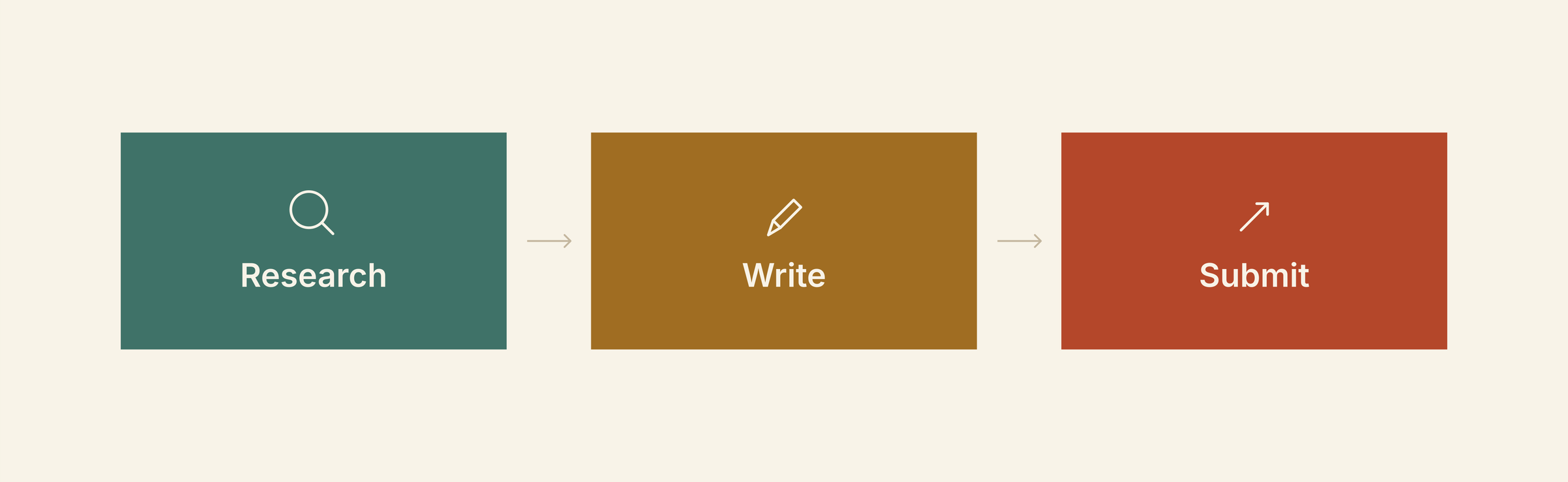
Each student works alone first
Every student is assigned a role and completes their own research before joining the group phase.
The collaborative phase does not open until every member of the team has finished theirs. Findings cannot be compiled from people who have not produced any, and a discussion where half the group has nothing of their own to bring is not a discussion. Each student arrives with something, and the case-study report is built out of those pieces rather than out of whoever spoke first.
The AI pushes instead of answering
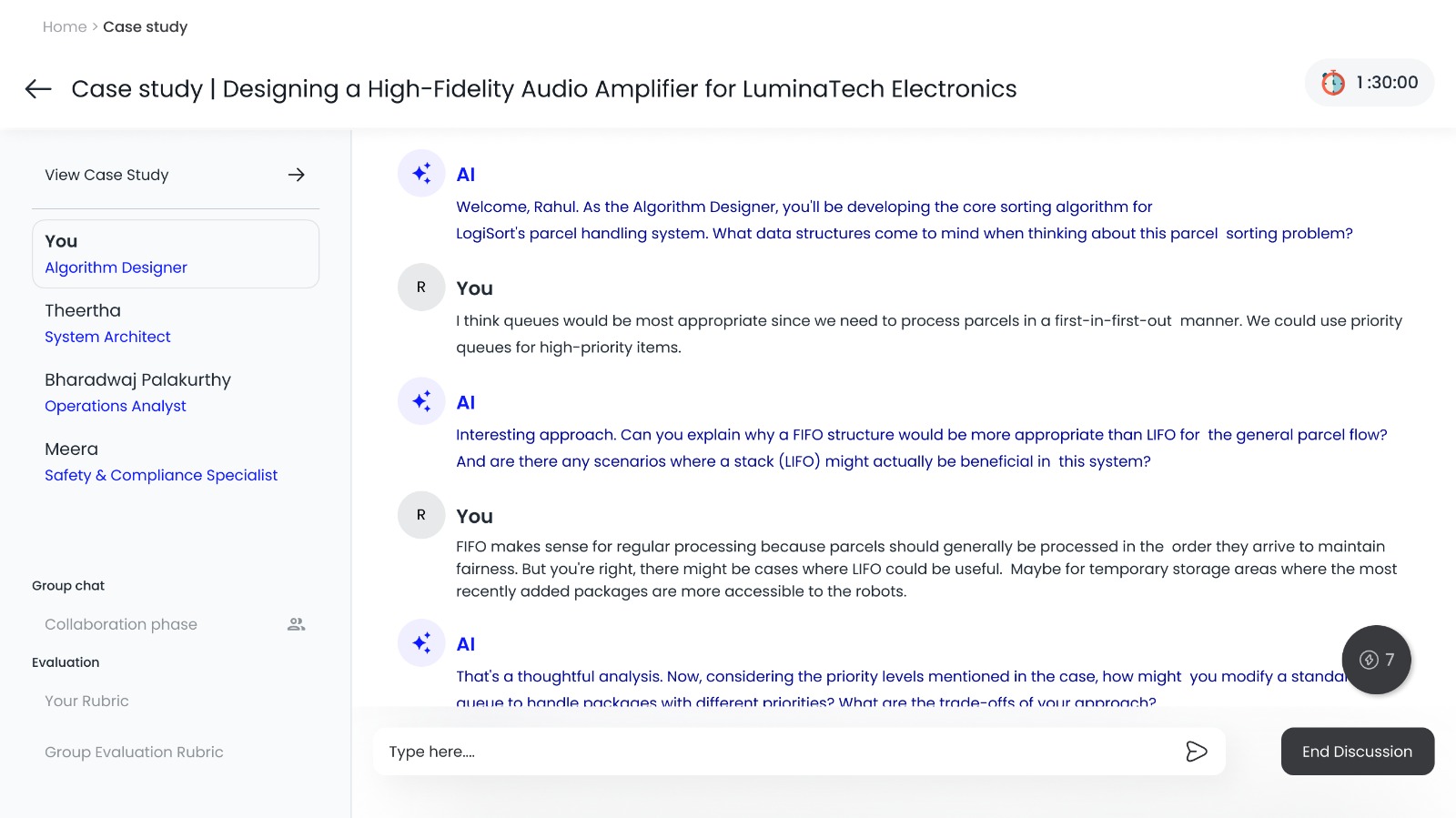
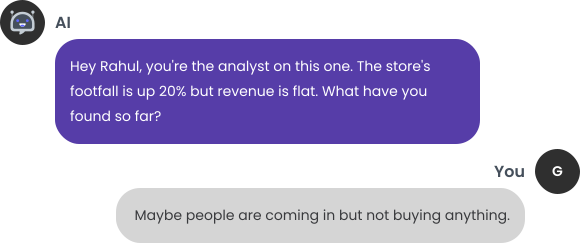
The AI was deliberately not built to hand over the answer. It nudges students further: challenging assumptions, asking them to explain their reasoning, pushing past the first response. The student stays responsible for the thinking.
AI credits are limited, because the usage has a real operating cost. The limit does something useful as well: a student has to frame a better question before spending one, so each exchange is deliberate rather than an unlimited answer box.
Faculty can see these exchanges. It is where the thinking behind a student’s conclusion becomes visible.
A discussion space without the AI
Students have an AI-free space to share insights, challenge each other and decide what to take forward.
Keeping that conversation inside the product does two things. It gives the group somewhere to reason together before approaching the AI. And it keeps the reasoning behind the group’s decisions visible, instead of disappearing into an external messaging app.

The reports mark the route, not the answer
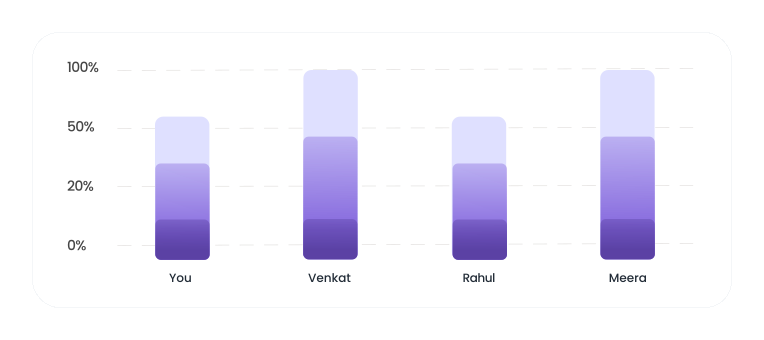
The final report is not the only thing assessed. The group report looks at how the team collaborated. Individual reports look at how each student understood and performed their role.
Assessment moves from what answer did they submit to how did they arrive there.
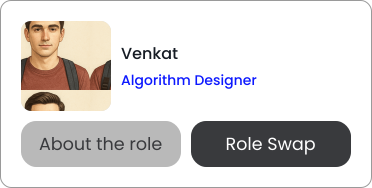
Role swapping Rejected
We considered letting students swap roles midway through a case study, and decided against it for the first version. By that stage students were already managing individual work, group collaboration and the case itself. Another layer of flexibility risked adding cognitive load without solving a core problem.
It stays an open opportunity rather than something that needed to ship.
The final design
The chat screen
The layout moved from two columns to three. In the two-column version the reports sat low in the first column, visible only after scrolling. Three columns give the reports their own panel, with members and related info in another.
Credits end a phase. When a student runs out, the phase submits itself rather than waiting for them to decide they are done.
In the individual phase that ends it. In the collaborative phase it ends it for that student alone. They stop being able to chat, and the group carries on with the credits they have left.
The discussion space
The group produces one report together, and the reasoning behind it has to survive the writing. A separate messaging app loses that, because the conversation ends up somewhere the report cannot reach.
The discussion and the AI chat share one panel, switched by a toggle. Students discuss with each other in one tab and query the AI in the other, without leaving the case study.
Whatever the group decides can be sent straight to the AI, so it ends up in the report instead of an unassessed chat.
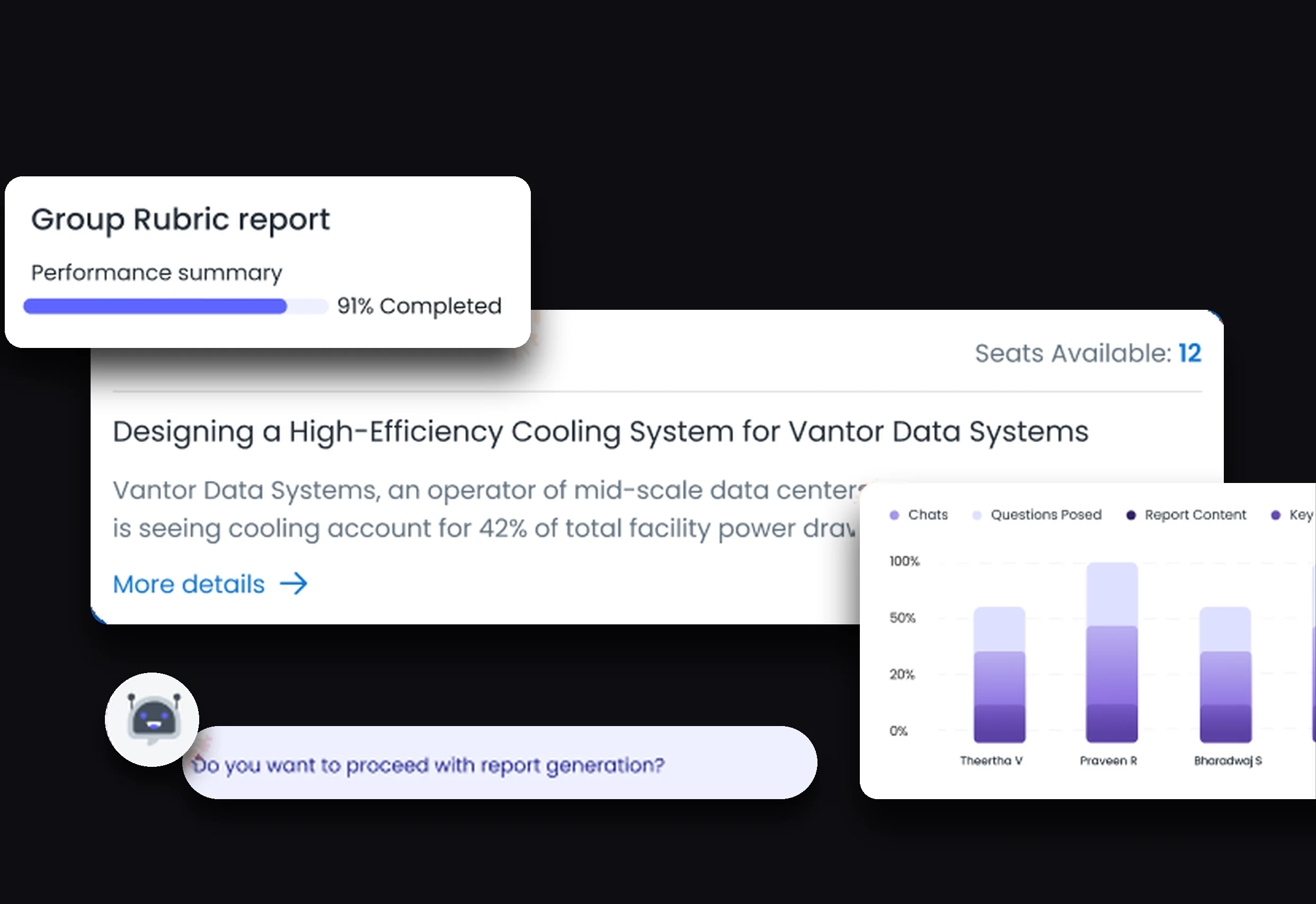
The reports
A report is not just a score. It opens into the rubric it was built from, so each mark is tied to the criterion it came from instead of arriving as a single number.
Below that is the analysis, covering how each student performed in their assigned role and how the group performed as a whole. These are two separate questions, and one combined mark answers neither.
What I would work on
Faculty can see every conversation, which is what makes the reasoning assessable. It may also change that reasoning. A student who knows their chat is being read is more likely to write what sounds like a good answer than to think out loud, and the module would end up capturing a performance instead of the reasoning it was built to reach.